Choosing a car: six cars compared by how they actually drive
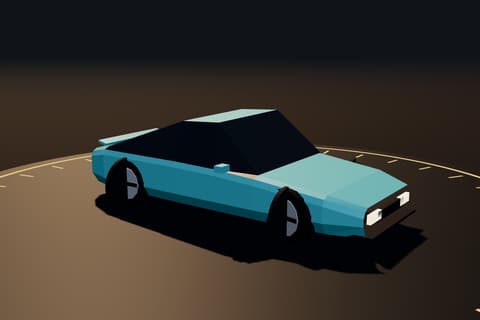
Slipline Garage has six fictional cars, and they differ in mass, wheelbase, power, throttle response and grip — not just paint. The Finch is the forgiving starter; the Meridian is the balanced all-rounder; the Brisk rewards precise transitions; the Longbow holds long slides; the Foundry demands throttle discipline; the Vector is the fastest and least assisted.
The numbers
| Car | Mass | Wheelbase | Drive force | Throttle response | Built-in stability | Unlocks at |
|---|---|---|---|---|---|---|
| Finch | 1,050 kg | 2.45 m | 6.4 kN | 200 ms | 55% | Start |
| Meridian | 1,250 kg | 2.60 m | 8.4 kN | 280 ms | 40% | 300 credits |
| Brisk | 900 kg | 2.25 m | 6.6 kN | 140 ms | 28% | 900 credits |
| Longbow | 1,420 kg | 2.92 m | 9.6 kN | 240 ms | 38% | 1,600 credits |
| Foundry | 1,680 kg | 2.84 m | 13.8 kN | 120 ms | 26% | 2,600 credits |
| Vector | 1,320 kg | 2.66 m | 13.6 kN | 130 ms | 10% | 4,000 credits |
These are the same figures the garage shows and the same figures the handling model uses.
What each number does to the drive
Mass. Heavy cars carry momentum: slides last longer and take longer to stop. Light cars change their mind quickly.
Wheelbase. A long wheelbase rotates slowly and steadily. A short one rotates fast. This is the single biggest difference between the Longbow and the Brisk.
Drive force. How easily the throttle alone can break the rear loose, and how well the car holds speed while sideways.
Throttle response. How quickly power arrives after you press. A slow response (Meridian) smooths out clumsy inputs. A fast one (Foundry) does exactly what you asked, immediately.
Built-in stability. A yaw-damping aid that makes slides easier to catch. It falls as the cars get more advanced.
Car by car
Finch — compact and forgiving. A short, upright hatch with moderate power. It cannot power-slide at high speed, so you learn the handbrake properly. Every beginner challenge is achievable in it.
Meridian — balanced coupe, smooth torque. More power than the Finch, delivered progressively, so throttle steering feels like a dial. The best second car.
Brisk — light and quick to rotate. A tiny open two-seater with the fastest steering rack. Superb in transitions and on Skyline Deck; unforgiving of late corrections.
Longbow — long wheelbase, calm slides. Slow to rotate, slow to snap. Once sideways in a long corner it simply stays there. The natural choice for longest-chain challenges on Canyon Loop.
Foundry — heavy, torquey, slow to settle. The most drive force and the most mass. Too much throttle and it keeps rotating; measured inputs make it majestic.
Vector — powerful, minimal assistance. Fast, grippy, and with almost no stability aid. It is a mastery option rather than an upgrade: in the calibration runs for this game, a tidy driving style beat an aggressive one in the Vector by a wide margin.
There is no “best”
No car wins everywhere. Score depends on speed and angle and not hitting anything, and each car trades those differently. That is also why several challenges provide a specific car — they are designed around its character.
How unlocks work
Cars unlock at lifetime totals of garage credits. Credits are earned only by playing and cannot be bought.
| Source | Credits |
|---|---|
| Each academy lesson, first pass | 100 |
| Challenge medal | 100 bronze, 250 silver, 500 gold (you are paid the difference when you improve) |
| Daily Run, first completion each day | 100 |
| Quick Drift | up to 30 per run |
Passing three lessons unlocks the Meridian. Credits are never spent, so unlocking one car does not delay the next, and a daily-assigned or challenge-provided car is lent to you even if you have not unlocked it.
Adjust any car with tuning, or see them all in the garage. Back to the drifting games overview.