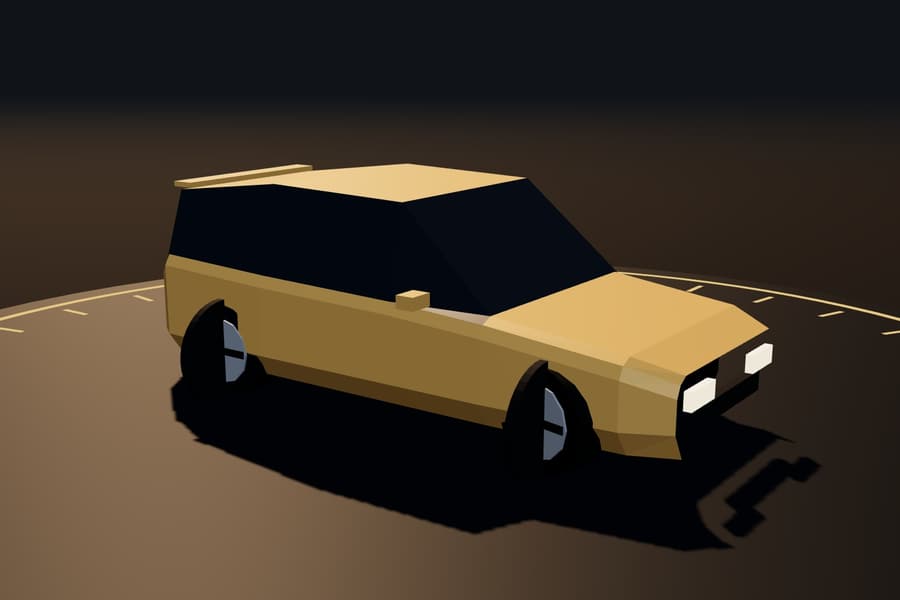
Finch
Compact and forgiving. Available immediately.
- Mass
- 1,050 kg
- Wheelbase
- 2.45 m
- Drive
- 6.4 kN
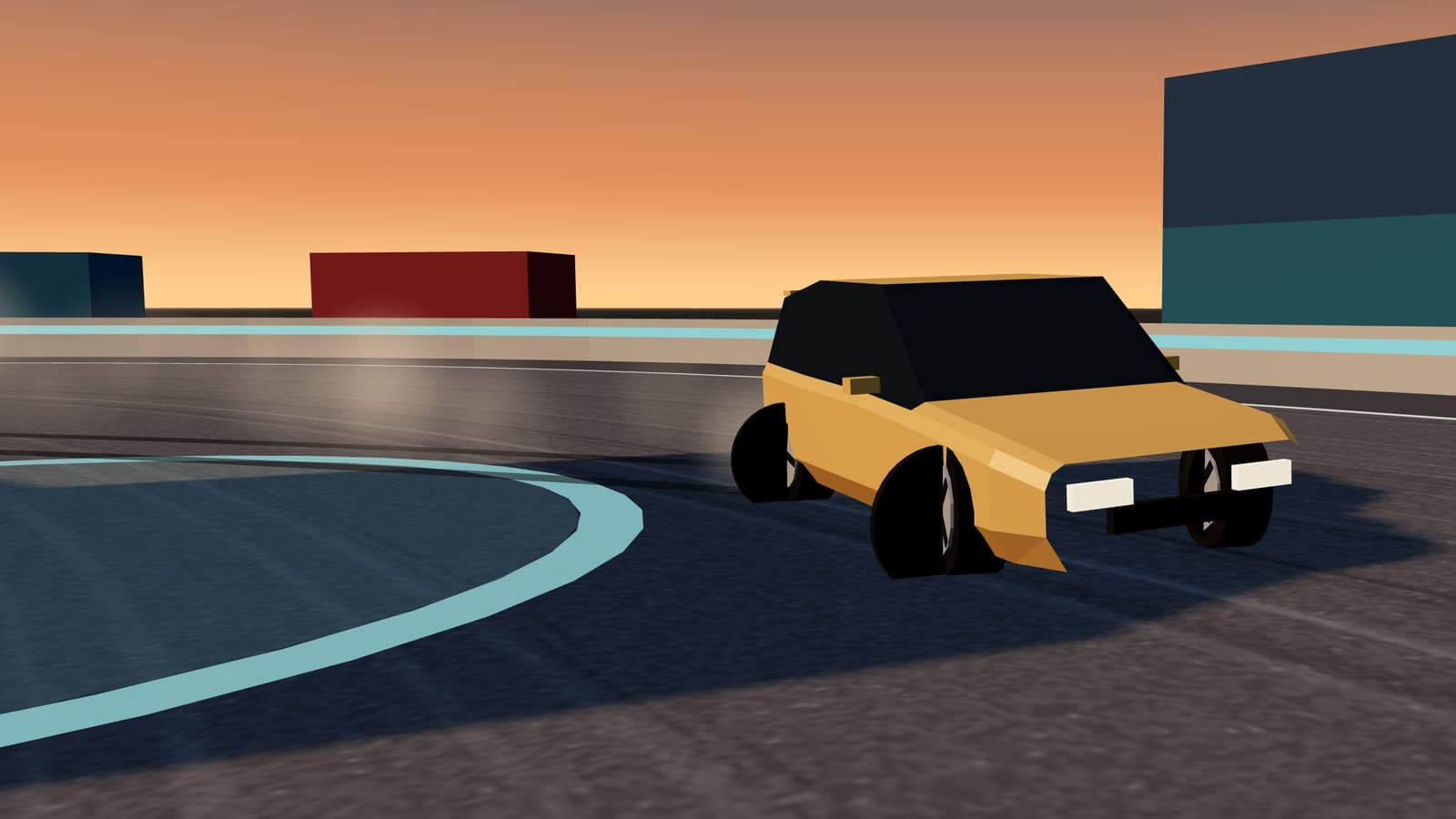
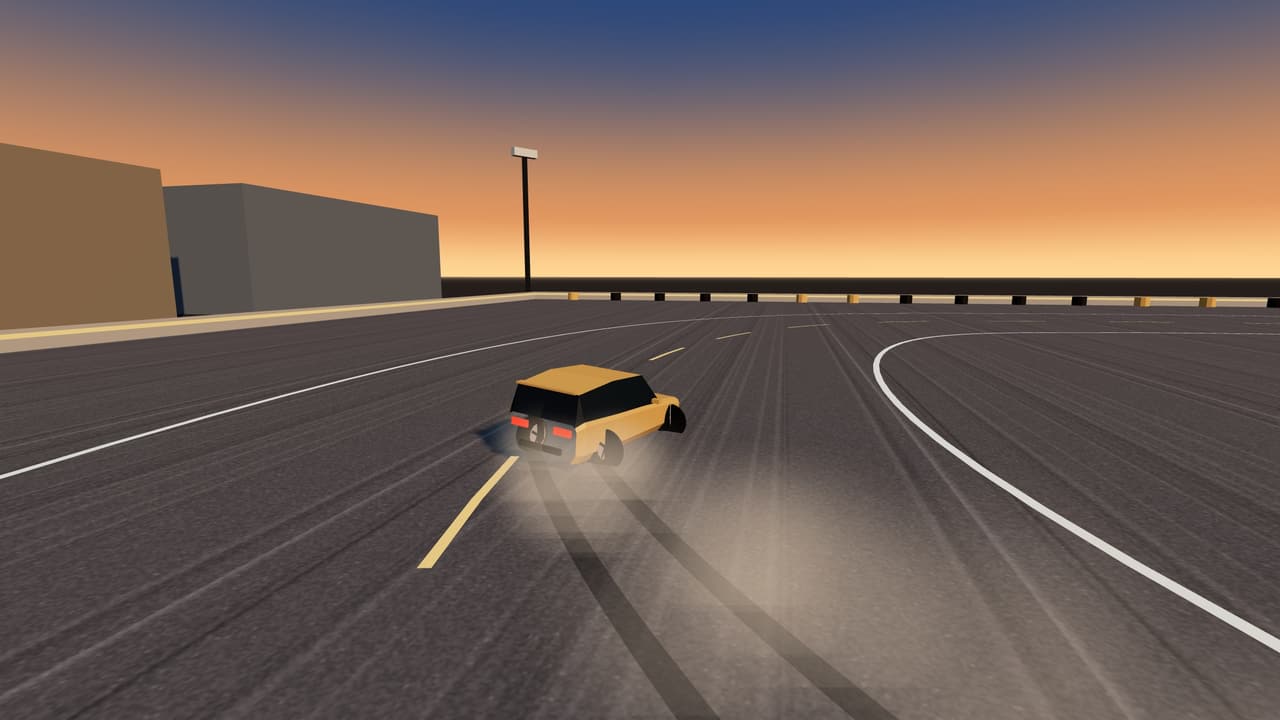
In-game capture · Free Drive · Harbor Circuit · Finch
Slipline Garage is one free 3D drifting game you play in your browser, with six ways to play it.
Free · No account required · Keyboard, touch and controller
A fixed challenge and car for the current UTC date. Load the page with JavaScript on to see today’s.
This site is not a catalogue of drifting games. It is a single original game, and every link below opens a different mode of it.
Ninety seconds, one car, one track, and a single number at the end. The fastest way to find out whether today is a good day.
Start a runEight short lessons that watch your real inputs and tell you what happened: from braking in a box to a clean scoring lap.
About Drift AcademySix challenges on each track, each judged on something different: score, one long chain, transitions, clipping zones, consistent laps.
About Challenge TourA new challenge and an assigned car every day at 00:00 UTC. No streaks to protect; miss a day and nothing is lost.
About Daily RunNo clock and no fail screen on any of the four tracks. Scores here are labeled as practice and never count.
About Free DriveLocal turn-taking for two: same car, same track, same sixty seconds, one after the other on a single device.
About Local Duel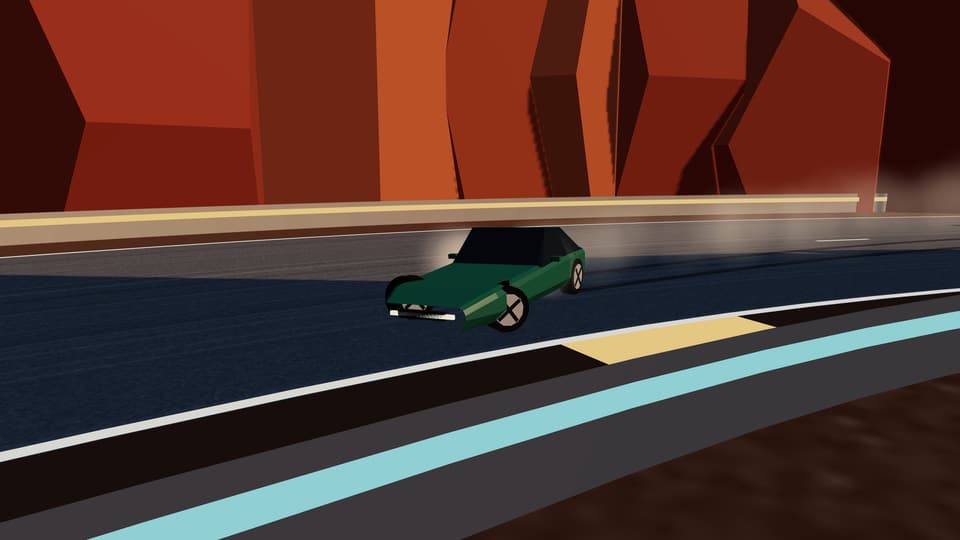
Long, patient sweepers under red rock. Corners last long enough that the slide has to be held, not thrown.
Read the Canyon Loop guideAll six are fictional, and none is simply “the best”. They differ in mass, wheelbase, power and grip, which is what you feel when the rear lets go. The Finch is yours from the start; the rest unlock through play.
Compact and forgiving. Available immediately.
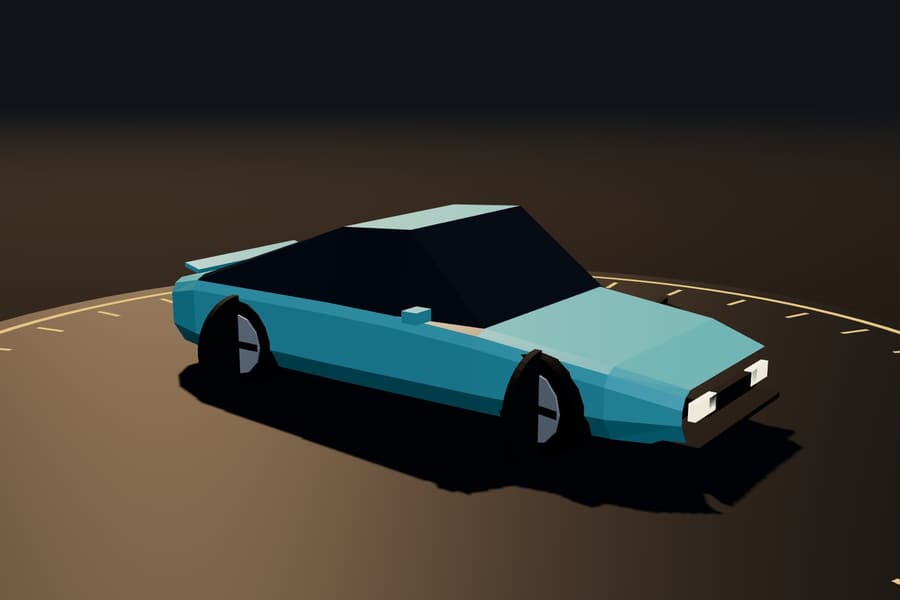
Balanced coupe, smooth torque. Unlocks at 300 credits.
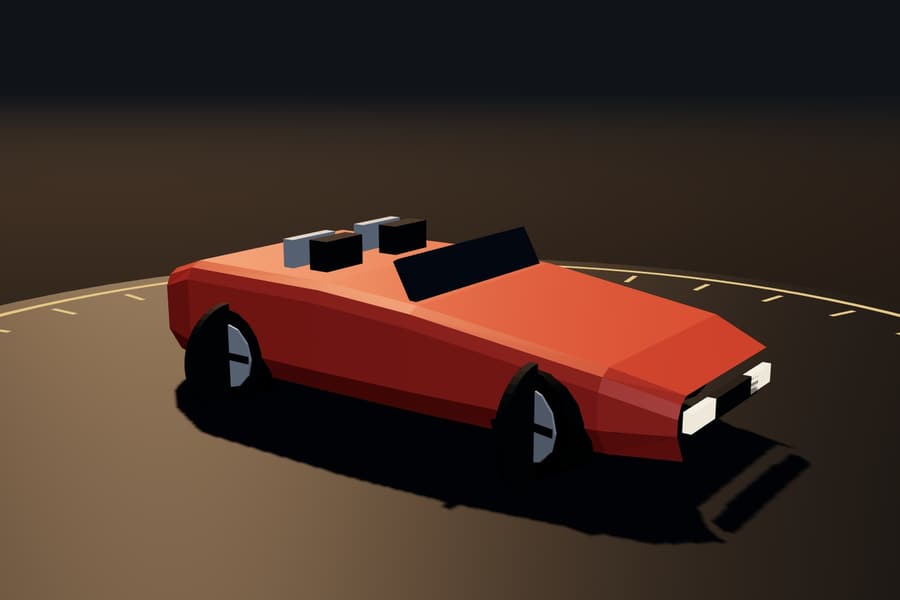
Light and quick to rotate. Unlocks at 900 credits.
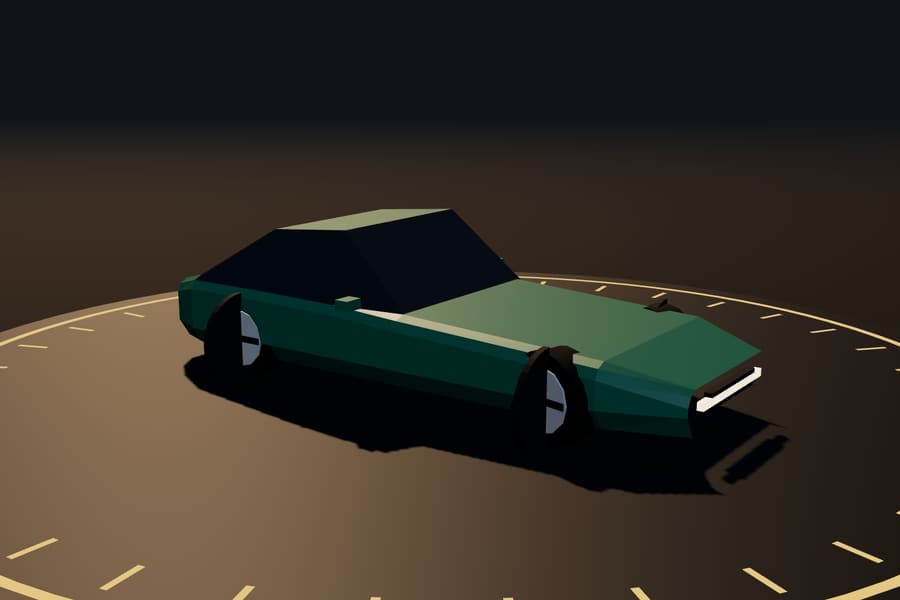
Long wheelbase, calm slides. Unlocks at 1,600 credits.
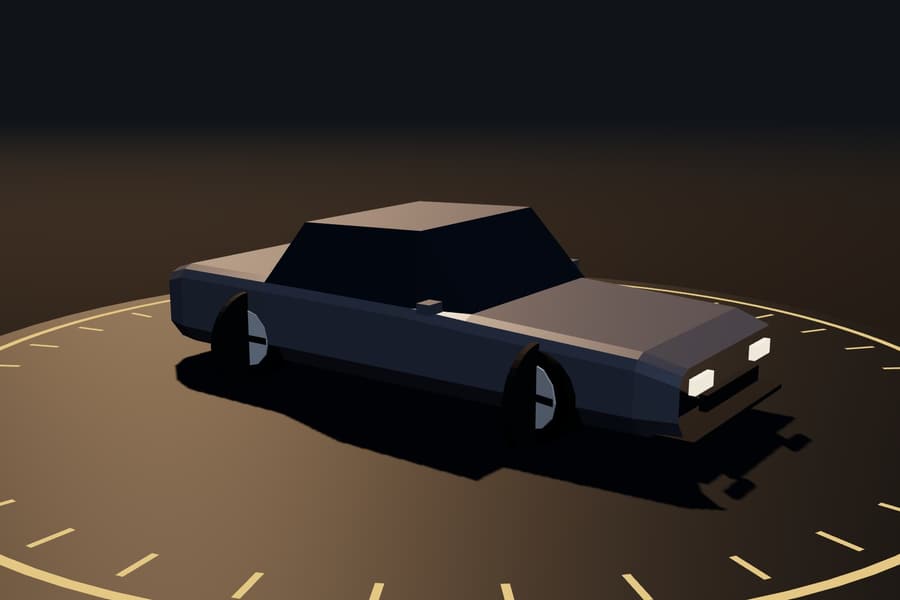
Heavy, torquey, slow to settle. Unlocks at 2,600 credits.
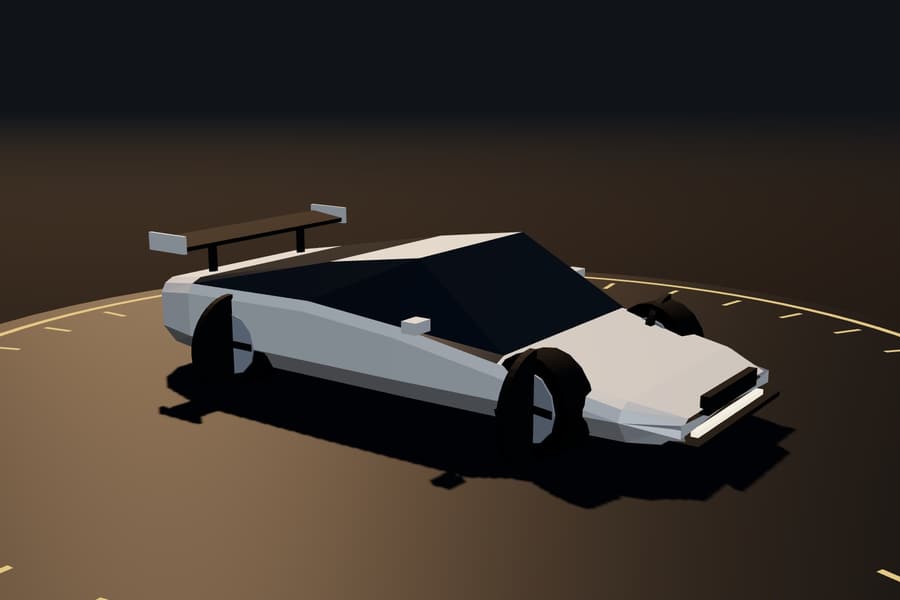
Powerful, minimal assistance. Unlocks at 4,000 credits.
Lesson 4 of the Drift Academy asks for one thing: start a slide of 25° or more, then bring the car straight without spinning. Do it twice.
When you spin, it says why: still on full throttle, countersteer too late, or too little of it. When you catch one, it reports the angle you caught it from.
Every key can be remapped except Escape, which always pauses. Touch controls appear on their own when you touch the game.
Runs in current Chrome, Edge, Firefox and Safari wherever WebGL is available. Development testing so far has been in desktop Chromium; phones, tablets and Chromebooks are supported by design and still being verified on physical devices. Details: keyboard controls, mobile controls, controller setup, performance settings.
Drifting games are driving games scored on controlled slides rather than lap time: you earn points for how fast, how sideways and how long you hold a car through a corner without hitting anything. Slipline Garage is one such game, free in the browser, with six cars, four tracks and six modes.
This page is the long version. It explains what drifting games are, how this one works under the bonnet, and where to go for detail on any single part. It is written by the people who built the game, and every number below is pulled from the game’s own configuration when the site is built, so the text and the game cannot disagree.
In a racing game the question is how quickly you got round. In a drifting game the question is how well you slid. The car is deliberately driven past the limit of its rear tires, so the tail swings wide, and the skill lies in holding it there: steering into the slide, balancing it on the throttle, and bringing it back straight before the wall arrives.
The idea comes from a real motorsport. Drifting grew out of Japanese mountain-road driving and is judged, not timed: line, angle, speed and style. Video games picked it up quickly because it translates so well. A slide is visible, readable and immediately satisfying, and “hold it longer” is a goal anyone understands in a second.
Most drift car games share a core loop:
Where they differ is in how the slide is produced. Some games simply rotate the car when you press a button. Others, including this one, calculate tire forces and let the slide emerge. That difference decides whether the game has anything left to teach you after the first evening.
One game. Not a portal, not a list of embeds, not a set of near-identical pages. Here is the whole of it:
| Part | What is in it | Where |
|---|---|---|
| Cars | Six fictional cars with different mass, wheelbase, power and grip | Garage |
| Tracks | Four compact, authored environments | Tracks |
| Lessons | Eight interactive lessons that react to your inputs | Drift Academy |
| Challenges | 24 authored events with bronze, silver and gold | Challenge Tour |
| Daily | One fixed challenge and car per UTC day | Daily Drift |
| Practice | Untimed driving on every track | Free Drive |
| Two players | Turn-taking on one device | Local Duel |
| Replays | A ghost of your own personal best | Ghost replays guide |
All of it is free. There is no account, no download, no purchase, no energy timer and no paid currency. Cars unlock with garage credits, which are earned by playing and cannot be bought.
You can be sliding inside a minute. A sensible first session looks like this:
If that first run was chaos, good. Go to the Drift Academy: eight lessons on a wide, walled yard, each a few minutes long. The step-by-step version of the technique is in how to drift in five steps, and the catch itself is covered in countersteering explained.
There is no drift button. The car slides for the same reason a real one does: the rear tires are asked for more grip than they have.
Each axle has a limited amount of grip, set by the weight pressing on it. That budget is shared between pushing the car along and holding it sideways. Spend most of it on acceleration, or lock the wheels with the handbrake, and there is little left for cornering. The tail goes wide.
A tire grips harder as it slips, up to a point. Beyond that point it grips less. In this game a fully sliding tire keeps between 76% and 84% of its peak grip, depending on the car. That drop is why a slide, once started, keeps going until you do something about it.
Brake, and weight shifts to the front wheels: the front bites and the rear goes light. Accelerate, and it moves back. Lifting off the throttle mid-corner is therefore a way to start a slide, and getting back on it is a way to settle one.
A long, heavy car rotates slowly and keeps rotating. A short, light one snaps round and stops just as quickly. That is the real difference between the Longbow and the Brisk, and no amount of paint changes it.
This is an arcade drift game, not a simulator, and it is honest about that. Roads are flat. There is no suspension model, no tire temperature, no gearbox, no damage. Three aids keep it learnable: the front wheels self-align when you release the steering, each car has some built-in yaw damping, and an optional stability assist strengthens both. The full list of what is and is not modelled is in arcade drift game or drift simulator.
The simulation runs at a fixed 60 steps per second regardless of your frame rate, so a slow laptop draws fewer frames of the same physics rather than different physics.
A slide scores when four things are true together:
| Rule | Threshold |
|---|---|
| Speed | At least 29 km/h |
| Angle | Between 12° and 75° |
| Position | On the road, moving forwards |
| Duration | Held for 0.45 seconds |
At full rate that earns 300 points per second. The rate scales with angle up to 42° and with speed up to 101 km/h.
Points build in a chain. Drive straight for 1.2 seconds and the chain is banked into your score. Start another slide inside that window and the chain carries on, with a multiplier that climbs by 0.25 every 1.5 seconds up to ×3. Linking corners is where big scores come from.
Banked points are never removed. And the obvious exploits do not pay: standing still, reversing, spinning on the spot, or circling one corner all stop scoring. Every rule and the reasoning behind it is in drift scoring explained.
Each environment is compact and built by hand around a different kind of driving. None is an open world, and the site will not call it one.
| Track | Lap | Road width | Level | What it asks for |
|---|---|---|---|---|
| Academy Yard | 307 m | 16 m | Beginner | Space to learn in |
| Harbor Circuit | 672 m | 15 m | Intermediate | A hairpin and a quick left-right |
| Canyon Loop | 897 m | 14 m | Intermediate | Patience through long sweepers |
| Skyline Deck | 503 m | 12.5 m | Advanced | Precision between close barriers |
Academy Yard is a walled apron with a painted oval, a ring for donuts and two more for figure eights. Harbor Circuit runs between container stacks beside the water. Canyon Loop winds under red rock; its scenery rises around the road, though the road itself stays flat. Skyline Deck sits forty floors up with two stretches of unfenced edge, where going over sends you back to the last gate. How to place the car on each is in drifting lines.
| Car | Character | Mass | Wheelbase | Unlocks at |
|---|---|---|---|---|
| Finch | Compact and forgiving | 1,050 kg | 2.45 m | Start |
| Meridian | Balanced coupe, smooth torque | 1,250 kg | 2.60 m | 300 credits |
| Brisk | Light and quick to rotate | 900 kg | 2.25 m | 900 credits |
| Longbow | Long wheelbase, calm slides | 1,420 kg | 2.92 m | 1,600 credits |
| Foundry | Heavy, torquey, slow to settle | 1,680 kg | 2.84 m | 2,600 credits |
| Vector | Powerful, minimal assistance | 1,320 kg | 2.66 m | 4,000 credits |
Credits come from play: 100 for each lesson passed, 100, 250 and 500 for a challenge’s bronze, silver and gold, and 100 for each day’s first Daily Run. They are never spent, so one unlock does not delay the next. A car assigned by a challenge or the Daily Run is lent to you even if it is still locked.
Each car has four tuning sliders that change real handling values. It is a setup tool rather than a car builder: you adjust behaviour, you do not assemble a vehicle. See six cars compared and tuning basics.
As a sense of scale: the first bronze in the game, Oval Warm-Up, needs 1,700 points in a minute. Its gold needs 5,700. Medal thresholds were set from completed runs by the game’s reference driver, not picked from the air.
Slipline Garage is a browser drift game: it runs in a tab and needs only a current browser with WebGL. Three ways to drive are built in.
Three quality presets trade shadows, resolution and smoke for frame rate; none changes handling. If frames slow down, resolution is reduced gradually before anything else.
What has been tested, plainly: development took place in desktop Chromium on Windows. The game has not yet been measured on physical phones, tablets or Chromebooks, so this site states no frame rates for them. Practical advice for slower machines is in performance settings and drifting on a Chromebook; how the whole thing runs in a tab is in how a browser drift game works.
Credits, medals and settings are saved in your browser. There is no account. Clearing browser data erases them, so the game can export a backup file and import it again, here or on another device.
With no server, a score cannot be verified, so there is no leaderboard and no list of invented rivals. You compete against your own best, shown as a ghost car on track. Shared results are labeled as unverified.
Local Duel is turn-taking on one device. There is no online multiplayer at launch, and nothing on this site pretends there is. More in two-player drifting on one device.
If the site carries advertising, it appears on reading pages, in clearly labeled spaces, and never on the page that hosts the game. The game works the same if adverts are blocked or fail to load.
If you are comparing options, these are the questions that separate one drifting game from another.
| Question | The range | Slipline Garage |
|---|---|---|
| How is the slide produced? | Scripted rotation → tire-force model | Tire-force model with arcade aids |
| Where does it run? | Console or PC install → app → browser tab | Browser tab, nothing to install |
| How big is the world? | One arena → open map | Four compact authored tracks |
| What do you tune? | Nothing → full builds | Four handling sliders and paint |
| Who do you compete with? | Nobody → online lobbies | Yourself, and one friend locally |
| How is it paid for? | Purchase → in-game currency → adverts | Free; no purchases at all |
| Does it teach? | A controls screen → structured lessons | Eight interactive lessons with feedback |
If you want an enormous map, a hundred licensed cars or live online lobbies, this is not that game, and it is better to say so. If you want a slide that responds to what your hands do, short challenges with a reason to retry, and a way to see yourself improve, it is.
A good place to continue is the fifteen-minute practice routine, the three ways to start a slide, what Free Drive offers, or the glossary if a term above was new. Or skip the reading: play Slipline Garage.
22 guides, each on one question, each written from the game’s own numbers.
Yes. Every car, track, lesson, challenge and mode is free. There are no purchases, subscriptions, paid currencies, loot boxes or energy timers, and nothing in the game can be bought.
No. The game runs in your browser tab and starts without registration. Progress is saved in the browser itself.
No. It is one original 3D drifting game with six modes: Quick Drift, Drift Academy, Challenge Tour, Daily Run, Free Drive and Local Duel. Nothing here is embedded from another site.
No, and it does not claim to be. It is an arcade drift game. Slides come from a tire-force model rather than a scripted animation, but roads are flat and suspension, gears, tire heat and damage are not modelled. Read exactly what is and is not simulated.
On a keyboard: WASD or the arrow keys to drive, Space for the handbrake, R to recover, C for the camera, Escape or P to pause. On touch screens a steering pad and three pedals appear. Standard controllers work too. Keyboard, touch and controller guides have the detail.
Build speed past about 50 km/h, steer into the corner, and tap the handbrake for a quarter of a second. As the rear steps out, release the steering so the front wheels turn into the slide, then use part throttle to hold it. The five-step guide walks through it.
Points build in a chain and are only banked after 1.2 seconds of driving straight. Hitting a wall, spinning past 100°, or staying off the road for more than 1.2 seconds forfeits the live chain. Banked points are never taken away. How scoring works.
It is built to: touch controls, a Low quality preset and automatic resolution scaling are all included. Development testing so far has been in desktop Chromium, and physical phones, tablets and Chromebooks have not all been verified yet, so no frame rate is promised for them. Performance settings lists what to try.
Ninety seconds on Harbor Circuit in the Finch. Your first result becomes the ghost you chase next time.
Play free